Airplane Suitcase Embroidery Design Review
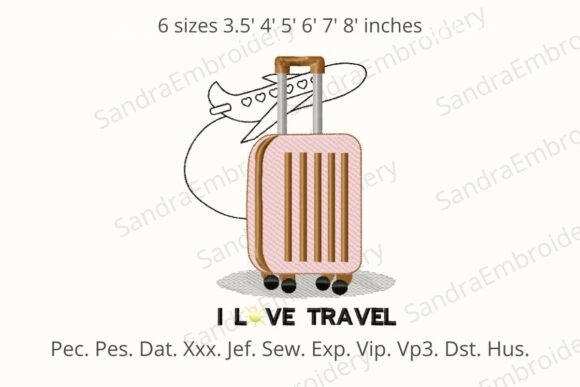
As a professional embroidery designer who has spent years translating digital files into tangible brand assets, I approach every new machine embroidery design with a critical eye. It is not enough for a file to look good on a screen; it must translate seamlessly onto fabric, withstand the rigors of commercial use, and elevate the perceived value of the product. Today, I am reviewing the Airplane Suitcase Embroidery Design, a piece marketed as a stylish travel motif featuring a suitcase, an airplane, and the phrase "I Love Travel." While the concept screams wanderlust, its true potential lies in how effectively it serves small business merch, branded patches, and custom apparel for entrepreneurs ranging from Etsy sellers to boutique owners.
First Impressions: Professionalism Meets Playful Wanderlust
Upon opening the digital embroidery file, the initial impression is one of friendly professionalism. The combination of a classic suitcase silhouette with a soaring airplane creates an immediate visual narrative that resonates with anyone who loves Vacation. However, for a business owner, the aesthetic must strike a delicate balance. This design leans slightly playful due to the text "I Love Travel," which makes it perfect for customer-facing merchandise like tote bags or event giveaways. Yet, the structural lines of the suitcase suggest a level of polish that could work well as a secondary logo accent on staff uniforms or aprons for a travel-themed café or boutique.
The visual personality here is versatile. It feels modern yet timeless, avoiding overly trendy elements that might date quickly. For a handmade brand, this Embroidery asset offers a clean, recognizable icon that can anchor a collection. Whether you are branding a line of luggage tags or adding a subtle detail to a linen shirt, the design carries a sense of adventure without feeling chaotic. The key to its success in a business context is ensuring the execution maintains that crisp, premium feel rather than devolving into a cluttered mess of thread.
Real-World Business Applications
When evaluating the Airplane Suitcase Embroidery Design for commercial deployment, we must look beyond simple decoration. How does this function as a core component of your brand identity? For a small business creating small business merch, this design shines on several fronts.
- Branded Patches: This is perhaps the most effective use case. Creating an embroidered patch with this design allows you to apply it to denim jackets, backpacks, or hats with minimal machine time. The distinct shapes of the plane and suitcase hold up well when isolated on twill backing.
- Staff Uniforms and Aprons: Imagine a travel agency, a vacation rental service, or even a bakery with a "travel" theme. Placing this design on the chest pocket of a chef's jacket or as an apron embroidery detail adds a layer of personality to the team's appearance. It signals to customers that the business values exploration and experiences.
- Tote Bags and Shopping Merchandise: The description explicitly mentions tote bag design suitability. A large-scale version of this file on a canvas tote makes for an excellent eco-friendly giveaway or retail item. The bold outlines ensure visibility even from a distance.
- Cap Embroidery: With careful resizing, the graphic portion (excluding the text) can work beautifully as a front cap emblem. This is ideal for promotional events where you want to hand out high-quality headwear that feels more exclusive than a standard printed hat.
For product designers, using this custom apparel element can differentiate your offerings. In a sea of generic prints, a high-quality embroidered finish suggests durability and care. It transforms a basic cotton shirt into a collectible item, increasing the perceived value and justifying a higher price point for your finished product.
Critical Considerations for Production
While the Airplane Suitcase Embroidery Design is promising, there are specific areas where caution is required to maintain quality. As a designer, I always advise testing before mass production. Here are the critical factors to consider:
Size and Detail Integrity
The inclusion of the text "I Love Travel" presents a challenge for smaller applications. If you attempt to shrink this design for a tiny button or a very small patch, the lettering may become illegible or the stitch density too high, leading to puckering. Always check the minimum recommended size. If the text becomes unreadable at a small scale, consider using a variation of the file that omits the text for those specific items.
Fabric Texture and Stabilizer Use
This design features solid shapes and outlines. On textured fabrics like fleece, heavy canvas, or knit polos, the needle penetration can be tricky. You must select the appropriate stabilizer to prevent distortion. For caps, a cap hoop and mesh stabilizer are non-negotiable to ensure the curves of the brim do not warp the airplane or suitcase shapes. Testing on a scrap piece of your actual fabric texture is essential to confirm the design sits flat and looks professional.
Thread Colors and Contrast
The visual impact of this design relies heavily on contrast. If you are embroidering on a dark uniform, ensure the thread colors chosen for the suitcase and plane pop against the background. Conversely, on light fabrics, avoid white-on-white unless you are aiming for a tonal, luxury effect. Always review your thread colors against the physical material under shop lighting, not just on a monitor.
Impact on Brand Identity and Customer Trust
In the competitive landscape of handmade products and local businesses, consistency is key. The Airplane Suitcase Embroidery Design can serve as a powerful tool for building brand identity. When used consistently across various touchpoints—such as packaging accents, staff wear, and retail goods—it creates a cohesive visual language. Customers begin to associate the specific style of the embroidery with your brand's commitment to quality.
Furthermore, embroidery inherently conveys a sense of craftsmanship. Unlike screen printing, which can crack over time, a well-executed commercial embroidery project ages gracefully. This durability translates to customer trust. When a client receives a tote bag or a patch with this design, they perceive it as a long-lasting asset rather than disposable merchandise. This perception boosts buyer engagement and encourages repeat purchases, as the item remains visible and functional in their daily lives.
Practical Designer Notes for Implementation
Before integrating this design asset into your workflow, follow these practical steps to ensure a successful launch:
- Test in Black and White: Run a test stitch using only black thread to evaluate the flow of the design, spacing, and any potential gaps in the satin stitches.
- Verify Hoop Size: Confirm that the hoop size required fits within your machine's capabilities and allows for proper tension.
- Create a Printable Mockup: Generate a printable mockup showing the design on your intended products. Send this to clients for approval before cutting any threads.
- Check Licensing: Ensure you have the correct commercial embroidery license if you plan to sell the final embroidered goods. Do not assume personal use rights extend to business sales.
- Inspect Spacing: Pay close attention to the space between the airplane, suitcase, and text. Tight spacing can cause thread bunching, especially on curved surfaces.
The Airplane Suitcase Embroidery Design offers a robust opportunity for small business owners to inject personality and professionalism into their merchandise. By understanding its strengths and limitations, and by adhering to best practices in stitching and material selection, you can turn this digital file into a standout feature of your brand. Whether it adorns a flight attendant's uniform, a traveler's tote, or a boutique's signature patch, this design has the potential to make a lasting impression.